
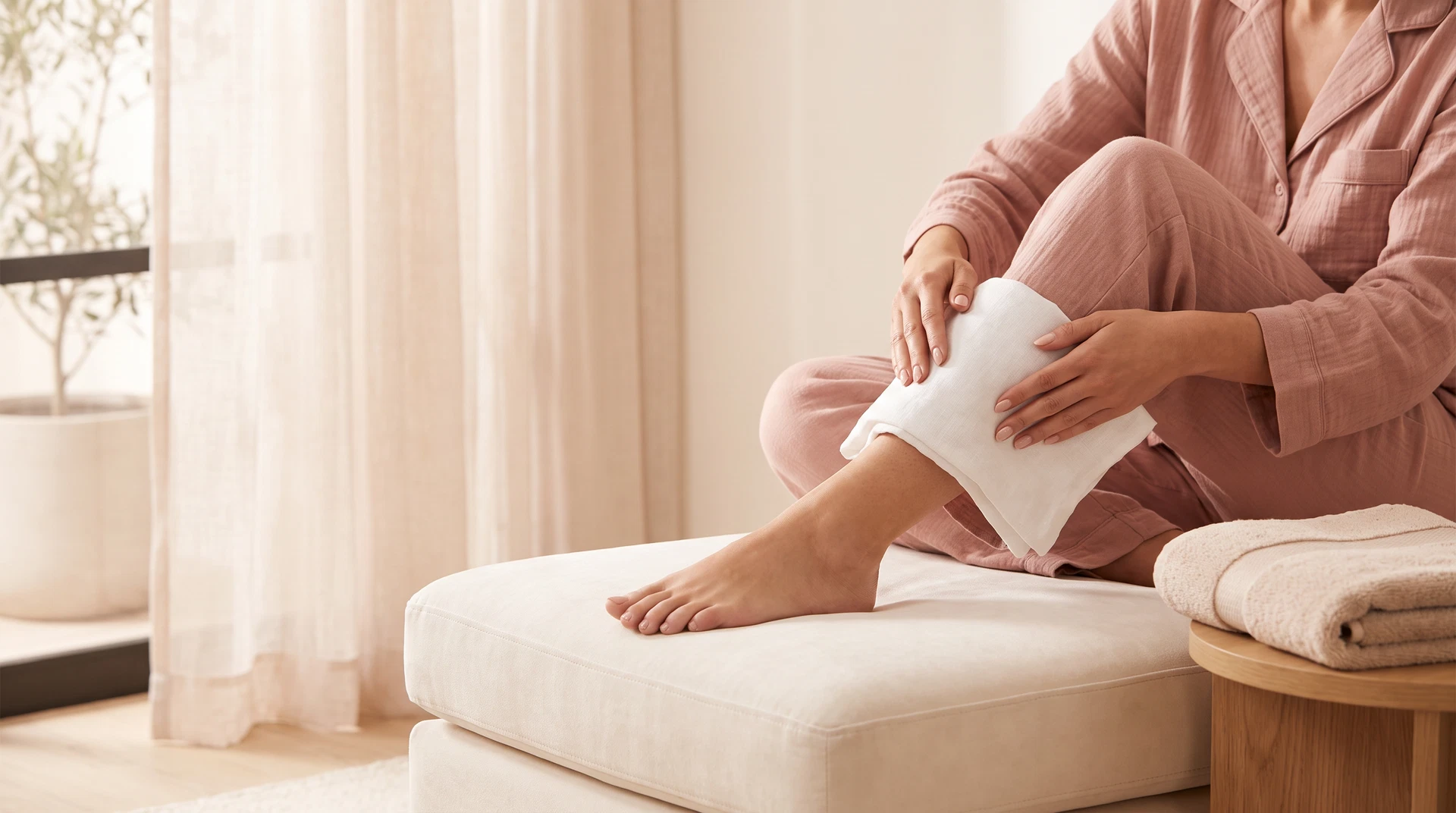
A calm, practical guide to heat, friction, clothing, cleansing and signs that deserve attention after waxing.
Keep heat and friction low
Dermatology and clinical guidance commonly recommends avoiding hot baths, saunas and other intense heat immediately after waxing. Tight clothing and repeated rubbing can also make a freshly treated area feel less comfortable.
Choose breathable, loose-fitting clothing when possible. If your plans involve intense exercise, heat or repeated friction, ask your esthetician how long to wait based on the area treated and how your skin looks after the service.
Cleanse and hydrate gently
Avoid touching the area unnecessarily. When cleansing, use a gentle approach rather than scrubbing, and pat the skin dry instead of rubbing it with a towel.
If your skin feels dry, use a simple, non-comedogenic moisturizer that is compatible with the area. Skip heavily fragranced or unfamiliar products until the skin feels calm, unless your provider recommends otherwise.
Understand what deserves attention
A small amount of temporary redness can occur after waxing. What matters is how the area changes over time and whether other symptoms appear.
Contact a qualified healthcare professional if redness persists or is accompanied by intense pain, significant swelling, pus, discharge, warmth, fever or feeling unwell. A website or spa cannot diagnose an infection.
If you are unsure whether a reaction is expected, contact your spa for service guidance and a healthcare professional for medical concerns.
A gentle first-day checklist
Keep the routine intentionally simple during the first 24–48 hours.
Avoid hot baths, saunas and intense heat.
Choose loose clothing and limit rubbing against the area.
Do not scratch, pick or squeeze bumps.
Follow the product and timing instructions provided by your esthetician.